AUGUST 8-15, 2012 CALGARY RACE

WORLD VA'A SPRINTS 2012
Gil canoe racing in Canada August 8-15th

            While I was enjoying friends at home, Gil took off for Calgary in Alberta, Canada.  They were hosting the World Va’a Sprints this year – an event held every two years; va’a is Hawaiian for outrigger canoe.  It was in New Caledonia, South Pacific in 2010 and will be in Rio de Janeiro, Brazil in 2014.  Canada, it seems, got really crazed with sporting events after hosting the winter Olympics in 2010.  So while it seems an odd location for Hawaiian canoe racing, they did an excellent job and the race course was on a fresh water reservoir. 

Let’s give them a cheer: 
C eh? N eh? D eh?
Yea!

Gil’s part was to arrive on the 8th and meet up with team-mates from Kauai.  This was a combination of 60s guys and 70s guys that were competing.  FYI:  70s guys can paddle in 60s category but not the other way round.  Some of the 70s guys (Gaylord Wilcox, Nappy Napoleon, and Nick Beck) happen to be paddlers that have competed together for the last 40-50 years – in nearly every long distance race there is including every Molokai Hoe!  Also from Kauai were three generations of one family: Nick’s son Hobey, and grandson Braden. 
            Now Gil has pretty much been a 6-man paddler since he started eight years ago but he also entered the one-man race, the V1 (see page above about upcoming races).  He was loaned a boat to practice on here and spent a month training for it along with Kawika Goodale, the current silver medalist, in addition to all the regular 6-man practices.  After the overnight flight, they went out for the first practice on the reservoir 8-8.
The more than 1200 paddlers had accommodations in the dorms of Mount Royal University – perfect.


Dorms at Mount Royal University, Calgary

Each “nation” or entry group had a tent on the grounds to place their backpacks, paddles, etc.  Registration was done in advance and then again onsite.  Paddlers were issued security badges in order to even enter the race site – all very official.  Groups ranged from Hawaii, Australia, New Zealand, Canada, England, Pacific NW, France, Italy, Brazil, Rapa Nui, New Caledonia, Fiji and Tahiti (although Tahiti guys had flight problems and did not make it).   Sorry if I missed anyone.

 The Heritage Center


Badges allowed entry to tents and races
Front row:  Steve Landis, Art Chow, Mike McHenry


 Tent City for paddlers representing their "nations"
           Checking out the race course on Glenmoore Reservoir

            On Friday August 10th the nations gathered in groups so they could parade toward the large tent for the Opening Ceremonies which included dances and a blessing by 27 of the Seven  Native Band Elders.  A BBQ followed the ceremony.  

 Hawaiians gather


Hawaiian Nation


 Canadians

 Aussies

 Kiwis from New Zealand


Hawaiian Parade


Enjoying the others in parade

Performance at Opening Ceremonies
Treaty 7 elders


RACES  
V1, V12, V6, men & women, ages 16-70s.  There was also a category of Adaptive paddlers (like Special Olympics) that were all qualified by trials and had the canoes “adapted” to accommodate them.  Vic Allen, a legend from Kauai is blind, and had a follower to tell him how to guide his boat which he manned alone.  For instance people without use of their legs had seat backs installed in the canoes that they could be strapped in.  A whole phenomenal story that deserves to be told in depth elsewhere would feature Jan Whitaker whose efforts have been responsible for making that part of the race a reality.


                          The sprint course was set at 250 meters.  
                500 meter = 1 turn, 1000m = 3 turns, and 1500m = 5 turns 

August 11th and 12th were the one-man and 12-man outrigger qualifying heats and races. The one-man and six-man races continued over the next three days with waiting in between. 

 Kawika at right, finished first in this heat, and moved into finals


V1s are racing, V6 Women getting ready to go

Streaming near tent complex and shops selling gear

Between races, the guys tried to be mellow but dinners were often after 10pm and days were long.  


Mike & Steve on KP duty in dorm 

Kawika working on strategy left, Gaylord right
                         The Olympics in London were a perfect distraction for the athletes.

Trying to keep the kittens in the box and get everyone to each staging site and through the queue on time was a challenge, always harder for some :)

 Steve 

Mike 


Nappy on guitar, right (not sure of uke player)


Ed

Kawika in tent, lots of waiting


What a shame the medals pictures were all blurry, best of the bunch, 
this hardly does them justice

Medal awards were on Wed. August 15th.  
V1 70s Kapuna guys, all Hawaii buddies! 
1st Gaylord Wilcox
2nd Nick Beck
3rd Nappy Napolean
They went on to win a total of three Gold medals in the V12 500m double hull race.
They also won the V6 500m, V6 1000m as Hawaii's Anuenue team

In the V6 1000m, their first place time 5:20, Canada 2nd with 5:30 and Hilo 5:47
Seat 4 in the Hilo boat was Hilo Bob and he died on the course of a massive heart attack

The World Sprints were suspended for tribute for several hours
his wife sent an email thanking everyone and being grateful that Bob went out 
doing what he loved

TAKE NOTHING FOR GRANTED AND LIVE EVERY DAY AS IF . . .

60s Golden Masters – 1000 meters
Gil guys won Bronze 9 seconds after 1st  place; 4 seconds after 2nd 
Kawika, Ed, Gil, Brian, Gaylord, Nick


AUGUST - MORE NATIVE PLANTS


Limahuli Gardens
            While on the topic of native plants and early Hawaiians, I took friends to Limahuli Gardens on the North Shore of the Universe this month.  Part of National Tropical Botanical Gardens, Limahuli (lee-ma-hoo-lee) is restoring an old Ahupua’a or land division that existed here.  

These terraced walls used for irrigating taro are probably 800 years old. 

Native plants are being propagated and planted as well,to restore the integrity of the area and make an effort to save some of them from extinction.

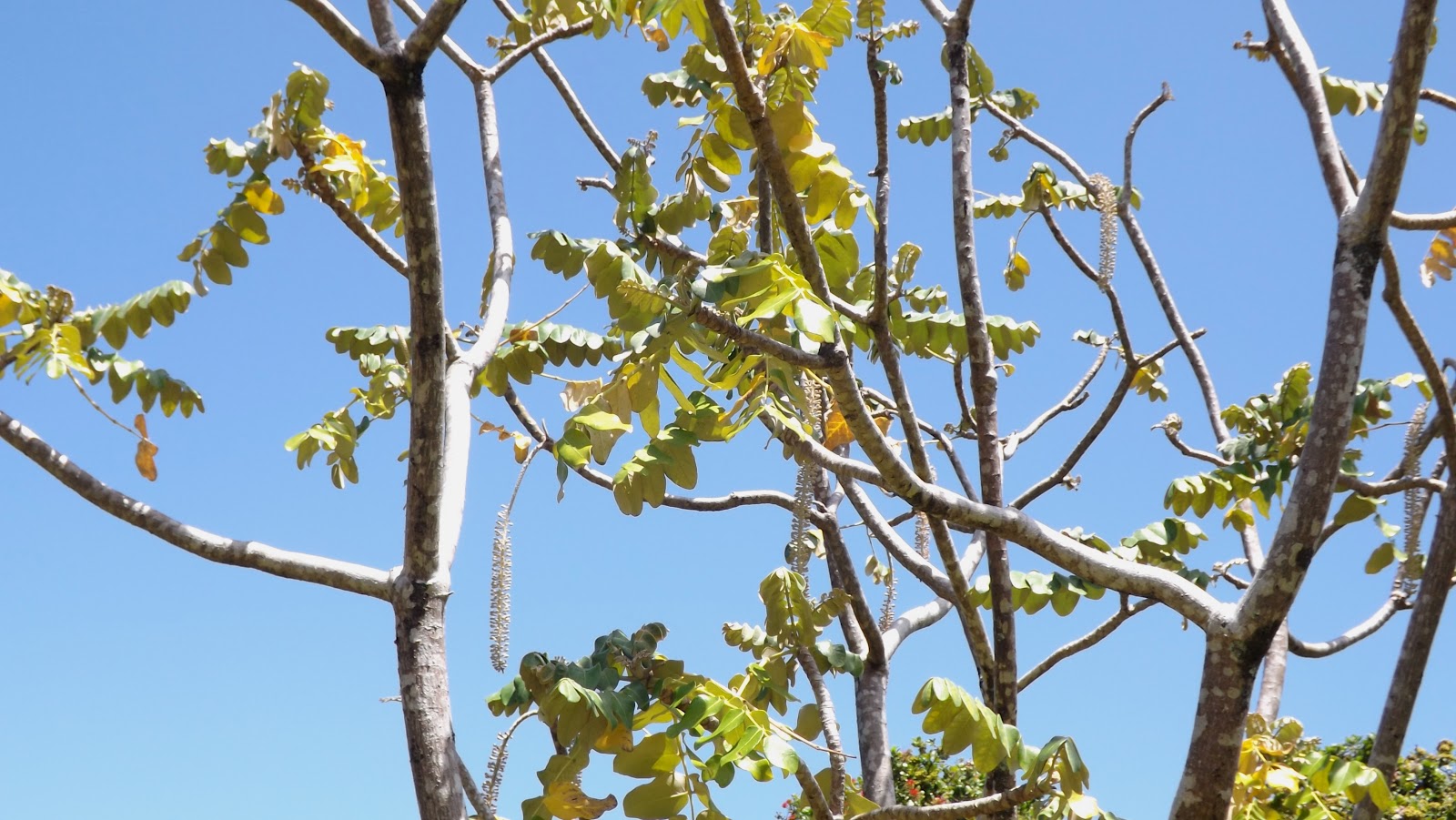
Munroidendron - a Kauai endemic tree that is endangered
25 feet tall, this one is in bloom: long white racemes of white flowers
While Limahuli literature says the Hawaiian name was lost, 
other sources call it Pokalakala (po-ka-la-ka-la)


 Ulula (oo-loo-la)
Another Kauai endemic - this one near extinction in the wild
It seems to thrive here but where attempted at the refuge in Kilauea, it dies, 
likely due to residue in the dirt from grazing cattle last century

While some of this work is being done in the areas open to the public, the valley extends to the mountain top and some of the restoration depends on teams helicoptered in to weed out invasive plants and plant indigenous plants in the Upper Limahuli Preserve.  Fences have been critically placed to keep out the feral goats that have done so much damage on the Na Pali, much like the pigs in the forest. 

Limahuli Valley

Memorial to Jaichima (hi-chee-ma)
            The morning was more than visiting the garden however.  Kris had asked me to take her to a place at 11:00 am so she could be in meditation simultaneous to the service being conducted on the mainland for her mentor, a Huichol Indian shaman, that had passed. 
            Near the entry to the garden Kris sang a song to welcome the morning – one she had sang with her friend.  Near the top, we found a shady spot overlooking both the ocean and the valley and I did a Hawaiian chant to humbly ask for the spiritual meaning of the moment to be anchored.  Kris had brought red flowers as a tangible reminder of Jaichima who often wore red.  The anthuriums were accompanied by some club moss, one of the oldest plants on earth.

 Kris & Sharon - old spiritual warriors

Kris and I have shared many sacred moments in many locations.  The spiral is often an icon to our work and I wasn’t surprised to find a native tree fern about to unfurl its new frond nearby.

 Hapu'u pulu (ha-poo-oo  poo-loo) - native tree fern
Spiral of potential new life


AUGUST 12, 2012 - Native Plants and Mini Golf


NATIVE PLANT SOCIETY 
              Kauai Mini Golf in Kilauea has made a really fun course and combined it with a botanical garden that conveys the history of Hawaii.  


          Members of the Kauai Native Plant Society (KNPS) were hosted at Kauai Mini Golf with a private tour given by Bino Castelo, landscape artist and native plant advocate. 


KNPS is well represented here
Bino is right of center in jeans - proud of his excellent work at the mini-golf
The folks with their hats on in the back row are friends from S. California, Kris & Glenn Cox.


    The first three holes represent native plants, those that arrived on the islands before humans.

Kokio Ke'oke'o  (co-kee-oh cay-oh-cay-oh)
native white hibiscus, the only scented hibiscus

The next three holes on the course feature plants that the first Polynesians brought.  

Manini Banana

           The Polynesians brought many plants with them and then cultivated many strains as they established themselves as Hawaiian.  Bananas, sugar cane, and taro are all examples of plants that were known to have hundreds of varieties by the point of contact with the west.

Manini or Convict tangs
Easy to see the relationship to a bunch of bananas and a bunch of fish

            Two of the most amazing things about the Hawaiians were their observation skills in nature and their cleverness in naming.  It is well known that there is a correspondence with creatures of the sea and land.  The manini (mah-nee-nee) is a common schooling reef fish and striped varieties of both taro, and in this case banana, were also named for the stripes.

            The golf course has plantation crops like pineapple, sugar cane, and coffee growing.  From there it continues with representations from the different ethnic groups that came as laborers to the islands, then the kinds of plants the aunties may have had in their own yards just a few years ago, and Hawaii today.  


                                                                      courtesy Stacey Donnelly
Pineapple - fruit of a bromeliad


Coffee - loaded with unripe berries, they will turn bright red

                                                                      courtesy Stacey Donnelly
Papaya - a modern crop

            Since the history represented at the course corresponds with the book I am writing, I have followed the golf/garden since it opened and it is filling in nicely with new additions all the time.  Below I have photos of a native plant, the uki'uki in the lily family.  

Uki'uki (oo-kee oo-kee) 
            This one was taken at 4000 feet elevation in its native Kauai mesic forest.  
Hawaiians did not name anything they didn't use and this berry was used for dye.


Uki'uki
            This is the same plant at about 200 feet elevation near the coast - and it gets organic fertilizer and pest control in the Kauai Mini-Golf botanical garden.  Both are thriving while the gardened ones are more plump.  

            In discussions with Bino, his agenda is to show people how lovely it can be to landscape with native plants.  I'm sure all of us from Kauai Native Plant Society agree.


AUGUST 11, 2012 Na Pali Challenge


Na Pali Challenge
           It rained all night again which provided this morning rainbow. 

           The boats were lined up in Hanalei Bay with the men’s crews on the escort boats this year and the women’s teams started the relay. 


          Namolokama had five boats in the race, and four medaled. (see page at top about Upcoming Canoe Races). 

Here is the starting line up for three of our relay teams.


   The start was into the rainbow - Hanalei took an early lead
(yellow and green boat - front left)

    Congrats to Hanalei – they won the Open Gold in 4 hours 54 minutes
Namolokama Open won Silver in 4 hours 58 minutes
Namolokama Open won Bronze in 4 hours 59 minutes


            In the Open (any age) class, the medalists came in within 5 minutes of each other - not bad for a near five hour race with open water team changes!

          While several of the older team members were in Calgary at World Sprints, the teams that entered the Na Pali did well.  In fact the race was between 12 of Gil's buddies.  

Namolokama Sr. Master won Gold in 5 hours 29 minutes 
Namolokama Sr. Master won Silver in 5 hours 37 minutes 
The third Open boat for Namo came in at 5 hours 38 minutes

CONGRATULATIONS TO ALL WHO ENTERED! 
PADDLING THE NA PALI COAST IS A PIRVILEGE,
LIVING THE HAWAIIAN CULTURE THAT CANOE RACING IS ALL ABOUT


AUGUST FIRST 2012 - ALOHA EARL


Hanalei says goodbye to Earl Simpson

Paddlers and family gathered to say goodbye to former coach Earl Simpson with a touching ceremony under the blessing of  Kumu Puna Dawson.


Hanalei Canoe Club offered to rig a double hull for the occasion.


Ashes and flowers were taken out into the Hanalei Bay by club members and family. 
Others joined on one-mans, 6-mans, surfboards, etc. including Earl’s dog.


Aloha Earl – you were loved by many